- What is Wholesale Ecommerce?
- Wholesale Ecommerce Platforms: An Overview
- B2B Wholesale vs Retail Ecommerce: Distinguishing the Differences
- B2B wholesale ecommerce focuses on selling products in bulk to other businesses, while retail ecommerce targets individual consumers.
- B2B transactions often involve negotiated pricing, personalized catalogs, and complex order management systems.
- Retail ecommerce typically involves lower order volumes, standardized pricing, and simpler purchasing processes.
- Selecting the Ideal Ecommerce Platform for Wholesaling
- The Role of Pricing in Ecommerce Wholesaling
- Types of Wholesalers and Their Impact on the Industry
- Leveraging B2B Ecommerce for Wholesale Success
- Conclusion
- Frequently Asked Questions
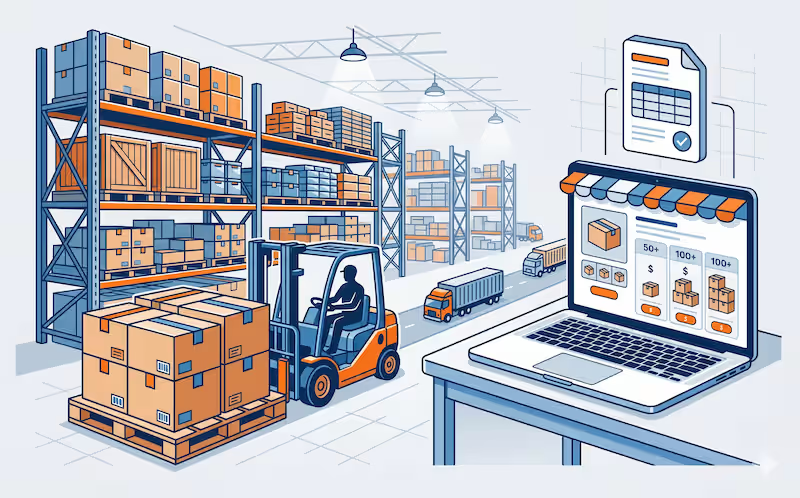
What is Wholesale Ecommerce?
Wholesale ecommerce is a growing industry that allows businesses to buy and sell products in bulk online. With the help of sales, suppliers, and the O2vend store, this industry is flourishing. With the help of sales, suppliers, and the O2vend store, this industry is flourishing. With the rise of technology, online business has made wholesale ecommerce more accessible and convenient for both buyers and sellers. Suppliers can now easily connect with buyers through platforms like o2vend, creating a seamless experience for customers. This has revolutionized the way people shop, as they can now browse and purchase products from the comfort of their own homes through online stores.
Accessible and Convenient
Wholesale ecommerce offers numerous benefits to suppliers and store owners, including cost savings, wider reach, and streamlined processes. With O2vend, you have more options for your wholesale business. For businesses looking to purchase products at lower prices, the o2vend platform offers an opportunity to buy in bulk directly from manufacturers or distributors. Wholesale ecommerce provides an opportunity to buy in bulk directly from manufacturers or distributors, making it an ideal option for businesses looking to purchase products at lower prices. This eliminates the need for intermediaries and reduces costs.
By conducting wholesale transactions online through an ecommerce website, businesses can expand their reach beyond local markets. This is made possible by using a commerce platform such as o2vend to set up their online store. Wholesale ecommerce platforms, like the O2Vend store, enable sellers to connect with buyers from different regions or even countries, increasing their customer base significantly. These platforms offer a range of features that facilitate seamless transactions and streamline the selling process.
Cost Savings and Streamlined Processes
One of the main advantages of wholesale ecommerce on the O2Vend platform is the cost savings it offers to store owners. The platform features various cost-saving features for store owners. By purchasing products in bulk from wholesale ecommerce websites, businesses can negotiate better prices per unit on the best wholesale ecommerce platforms, resulting in higher profit margins when selling them at retail prices on o2vend.
Moreover, the o2vend platform for wholesale ecommerce streamlines the ordering process by eliminating paperwork and manual tasks associated with traditional wholesaling methods. Online platforms like o2vend are ideal for wholesale ecommerce businesses and wholesale businesses. They provide a convenient way to browse products, place orders, generate invoices, and process payments.
Wholesale Ecommerce Platforms: An Overview
Wholesale ecommerce platforms like o2vend offer a range of features and functionalities to cater to the specific needs of businesses engaged in wholesale operations. Let’s take a look at some popular platforms for ecommerce businesses, including o2vend, that cater to wholesale businesses.
Shopify Plus
Shopify Plus is a widely recognized wholesale ecommerce platform that provides businesses with a comprehensive suite of tools for managing inventory, processing orders, and facilitating communication between buyers and sellers. With the integration of o2vend, businesses can further enhance their wholesale operations and streamline their processes. With the integration of o2vend, businesses can further enhance their wholesale operations and streamline their processes. It offers scalability for wholesale ecommerce platforms, allowing businesses to grow their operations seamlessly with o2vend. With its user-friendly interface and extensive app marketplace, Shopify Plus, a leading e-commerce platform, makes it easy for wholesalers to customize their online stores according to their unique requirements. O2vend, a popular app on the Shopify Plus platform, further enhances the customization options available to wholesalers.
Magento Commerce
Another prominent player in the wholesale ecommerce platform market is Magento Commerce, which offers a robust solution for businesses looking to establish their online presence. With its advanced features and user-friendly interface, Magento Commerce is a top choice for retailers looking to optimize their o2vend operations. This wholesale ecommerce platform, o2vend, offers robust features such as advanced inventory management, flexible pricing options, and seamless integration with various payment gateways. The O2Vend platform empowers wholesalers to create personalized experiences for their customers through customizable themes and extensions.
WooCommerce
WooCommerce, an open-source ecommerce plugin for WordPress, is also a popular choice among wholesalers using the o2vend platform. It provides a user-friendly interface combined with powerful features like inventory management, order processing, and customer relationship management (CRM) capabilities for wholesale ecommerce platforms. With O2vend, you can easily manage your inventory, process orders efficiently, and enhance your customer relationships. With its extensive library of plugins and themes, WooCommerce, one of the top wholesale ecommerce platforms, allows businesses to tailor their online stores to suit their brand identity. Whether you are looking for a platform like o2vend or other options, WooCommerce offers the flexibility and customization needed to create a successful online store.
These wholesale ecommerce platforms, such as o2vend, serve as valuable resources for businesses looking to streamline their operations and enhance the buying experience for their customers. By leveraging the capabilities of o2vend and other platforms, wholesalers can effectively manage inventory levels, automate processes, and foster better communication with buyers.
B2B Wholesale vs Retail Ecommerce:
Distinguishing the Differences When it comes to distinguishing the differences between B2B wholesale and retail ecommerce, it’s important to understand the distinctions between these two models. B2B wholesale ecommerce involves transactions between merchant wholesalers and retailers, while retail ecommerce refers to online business conducted directly with consumers through an online store. By understanding the nuances of these models, businesses can better tailor their strategies to meet the needs of their target audience. When it comes to distinguishing the differences between B2B wholesale and retail ecommerce, it’s important to understand the distinctions between these two models. B2B wholesale ecommerce involves transactions between merchant wholesalers and retailers, while retail ecommerce refers to online business conducted directly with consumers through an online store. By understanding the nuances of these models, businesses can better tailor their strategies to meet the needs of their target audience.
B2B wholesale ecommerce focuses on selling products in bulk to other businesses, such as merchant wholesalers, while retail ecommerce targets individual consumers and aims to increase sales channels for the retailer through effective marketing strategies.
There are two main types of platforms: B2B wholesale platforms and retail platforms. B2B wholesale ecommerce is all about selling products in large quantities to other businesses on a platform. This means that the customers of B2B wholesalers are typically retailers or other businesses that need a large supply of goods to sell on their platform to their own customers. On the other hand, retail ecommerce platform is focused on selling products directly to individual consumers.
B2B transactions often involve negotiated pricing for wholesale businesses, personalized catalogs for retail businesses, and complex order management systems that meet the needs of wholesale ecommerce businesses.
In the world of B2B wholesale ecommerce, transactions on the platform are not as straightforward as they are in retail. When dealing with other businesses on wholesale ecommerce platforms, pricing is often negotiated based on factors like order volume and long-term contracts. B2B wholesalers may offer personalized catalogs tailored to the specific needs of their business customers. To manage these complex transactions, B2B wholesalers rely on sophisticated order management systems that can handle large volumes of orders and ensure smooth operations.
Retail ecommerce, especially for online businesses, typically involves lower order volumes, standardized pricing, and simpler purchasing processes. This is especially true for businesses using platforms like Magento to manage their product catalogs. These platforms are particularly helpful for wholesale businesses looking to streamline their operations and reach a wider customer base.
Retailers who sell directly to consumers through ecommerce platforms have a different set of considerations. Unlike B2B wholesalers who deal with bulk orders, retailers generally have lower order volumes since they cater to individual customers. As a result, pricing for retail products on wholesale ecommerce platforms tends to be standardized across all customers. The purchasing process for consumers on wholesale ecommerce platforms is also simpler compared to the negotiation-heavy nature of B2B transactions.
Selecting the Ideal Ecommerce Platform for Wholesaling
There are several factors that need to be considered. Scalability, customization options, and integration capabilities are important when choosing wholesale ecommerce platforms for your business.
Scalability is important because as your wholesale business grows, you want a platform that can handle increasing traffic and transactions without compromising performance. Look for platforms that offer flexible pricing plans and can accommodate the growth of your customer base.
Customization options are essential for tailoring the platform to meet your specific wholesale needs. You should be able to customize the user interface, product catalog, pricing structures, and order management processes according to your requirements.
Integration capabilities are crucial as they allow seamless connectivity between your ecommerce platform and other systems such as inventory management software or payment gateways. This ensures efficient operations and reduces manual work.
To choose the best wholesale ecommerce platform, it’s important to align it with your business goals. Consider what features are necessary for efficient wholesale operations such as bulk ordering, tiered pricing, or minimum order quantity settings.
Researching customer reviews can provide valuable insights into the strengths and weaknesses of different platforms. Seeking recommendations from industry experts who have experience with ecommerce wholesaling can help you make an informed decision.
The Role of Pricing in Ecommerce Wholesaling
Pricing is a critical factor in the world of ecommerce wholesaling. It directly impacts the profitability and competitiveness of wholesalers, making it essential to get it right.
Wholesale Pricing Models
Wholesale pricing models come in different forms, each tailored to meet specific business needs. One common approach is tiered pricing, where customers are offered different price levels based on their purchasing volume or loyalty. This incentivizes customers to buy more and rewards their continued support.
Another popular model is volume-based discounts. Wholesalers offer reduced prices as customers increase their order quantities. These discounts encourage bulk purchases and help build long-term relationships with buyers.
Negotiated contracts are also prevalent in wholesale ecommerce. Wholesalers engage in direct negotiations with customers to establish customized pricing agreements that suit both parties’ requirements. This allows for flexibility and ensures mutual satisfaction.
Dynamic Pricing Strategies
In today’s fast-paced market, dynamic pricing strategies have become increasingly important for wholesalers to stay competitive. Real-time adjustments based on market demand enable wholesalers to optimize prices dynamically. By analyzing market trends and customer behavior, wholesalers can adjust their prices accordingly, ensuring they remain attractive while maximizing profits.
Dynamic pricing also allows businesses to respond quickly to changes in supply and demand dynamics, ensuring optimal inventory management and reducing the risk of overstocking or understocking products.
Types of Wholesalers and Their Impact on the Industry
There are different types of wholesalers in the ecommerce industry, each playing a unique role and exerting an impact on the supply chain. These include manufacturers, distributors, and dropshippers. Understanding these various types of wholesalers is crucial for businesses looking to optimize their wholesale operations.
Manufacturers
Manufacturers are wholesalers that produce goods themselves. They often sell their products directly to retailers or other businesses without involving intermediaries. By eliminating middlemen, manufacturers can offer competitive prices to their customers. They have control over the production process, ensuring quality and timely delivery.
Distributors
Distributors act as intermediaries between manufacturers and retailers. They purchase goods in bulk from manufacturers and then sell them to retailers at a slightly higher price. Distributors play a vital role in ensuring that products reach retailers efficiently and on time. They also help with inventory management by storing goods in warehouses until they are needed.
Dropshippers
Dropshippers differ from traditional wholesalers as they do not hold inventory themselves. Instead, they partner with manufacturers or distributors to fulfill orders directly to customers. When a customer places an order with a retailer, the dropshipper coordinates with the manufacturer or distributor to ship the product directly to the customer’s doorstep. This eliminates the need for retailers to invest in inventory upfront.
Each type of wholesaler has its own impact on factors like product availability and pricing within the ecommerce industry. Manufacturers ensure a steady supply of goods while maintaining quality control. Distributors streamline distribution processes and provide convenience for retailers. Dropshippers offer flexibility by removing inventory management responsibilities from retailers.
By understanding these different types of wholesalers, businesses can identify potential partners that align with their specific needs and goals in order to enhance their wholesale operations.
Leveraging B2B Ecommerce for Wholesale Success
Streamlining Operations and Enhancing Efficiency
B2B ecommerce platforms offer a range of features specifically designed to cater to the unique needs of wholesalers. With bulk ordering capabilities and account management tools, these platforms enable wholesale businesses to streamline their operations and enhance efficiency.
By leveraging B2B ecommerce solutions, wholesalers can simplify the process of managing orders from their business customers. With the ability to handle bulk orders seamlessly, wholesalers can save time and effort by automating repetitive tasks associated with processing large quantities of products.
Improving Customer Experience and Expanding Reach
In addition to operational benefits, B2B ecommerce also provides opportunities for wholesalers to improve customer experience and expand their reach. These platforms allow wholesalers to create personalized catalogs for their customers, showcasing relevant products tailored to their specific business needs.
Furthermore, integrating B2B ecommerce with other business systems like inventory management and CRM software can further enhance efficiency. By synchronizing data across different systems, wholesalers can gain real-time visibility into inventory levels, track customer interactions, and provide better service.
Embracing Digital Transformation in Wholesale Business
The adoption of B2B ecommerce is becoming increasingly crucial for wholesale businesses looking to stay competitive in today’s digital landscape. It allows them to tap into new markets by reaching a broader customer base beyond traditional boundaries.
Moreover, B2B ecommerce platforms provide marketing tools that enable wholesalers to promote their products effectively. Through targeted campaigns and analytics-driven insights, they can attract new customers while nurturing existing relationships.
Conclusion
Congratulations! You have now gained a comprehensive understanding of wholesale ecommerce and its various aspects. From exploring the differences between B2B wholesale and retail ecommerce to selecting the ideal platform for wholesaling, we have covered it all.
Now armed with this knowledge, it’s time to take action and leverage the power of B2B ecommerce for your wholesale business. Implement the strategies discussed in this article to optimize your pricing, identify your target audience, and select the right platform that aligns with your business goals.
Remember, success in the world of wholesale ecommerce is not just about making sales; it’s about building lasting relationships with your customers and providing them with exceptional value. So go ahead, put these insights into practice, and watch as your wholesale business thrives in the digital era.
Frequently Asked Questions
Can we create passive income with wholesaling?
Yes, wholesaling can be a source of passive income. By purchasing products at a lower price and selling them at a higher price to retailers or consumers, you can earn a profit without actively managing inventory or dealing with customer orders. However, it requires careful planning, finding reliable suppliers, and building strong relationships in the industry.
What is Wholesale Ecommerce?
Wholesale ecommerce refers to the online buying and selling of goods in bulk between wholesalers and retailers. It allows wholesalers to reach a wider audience and retailers to access a variety of products at competitive prices. The transactions are typically conducted on dedicated platforms that cater specifically to B2B (business-to-business) sales.
How do I select the ideal ecommerce platform for wholesaling online businesses? As a wholesaler, it is crucial to choose the right platform that meets your specific needs. One popular option is Magento, a powerful and versatile platform designed for wholesale businesses. With its robust features and customizable options, Magento can help streamline your operations and enhance the efficiency of your online business.
When choosing an ecommerce platform for wholesaling, consider factors such as ease of use, scalability, integration capabilities, pricing options, and customer support. Look for platforms that offer features like bulk ordering, inventory management tools, customizable pricing structures, and seamless communication channels between buyers and sellers.
What is the role of pricing in ecommerce wholesaling?
Pricing plays a crucial role in ecommerce wholesaling as it directly impacts profitability. Wholesalers need to strike a balance between offering competitive prices to attract buyers while ensuring they still make enough profit margin. Pricing strategies may involve volume discounts for larger orders or setting minimum order quantities to encourage higher-value purchases.
How does B2B ecommerce help online business achieve wholesale success? By connecting suppliers and brokers, B2B ecommerce platforms facilitate sales and streamline the wholesale process.
B2B ecommerce provides numerous advantages for wholesalers. It enables them to expand their reach beyond geographical limitations by connecting with potential buyers worldwide. With efficient online platforms, wholesalers can streamline their operations by automating processes like order management and inventory tracking. This leads to increased efficiency, reduced costs, and improved customer satisfaction.


