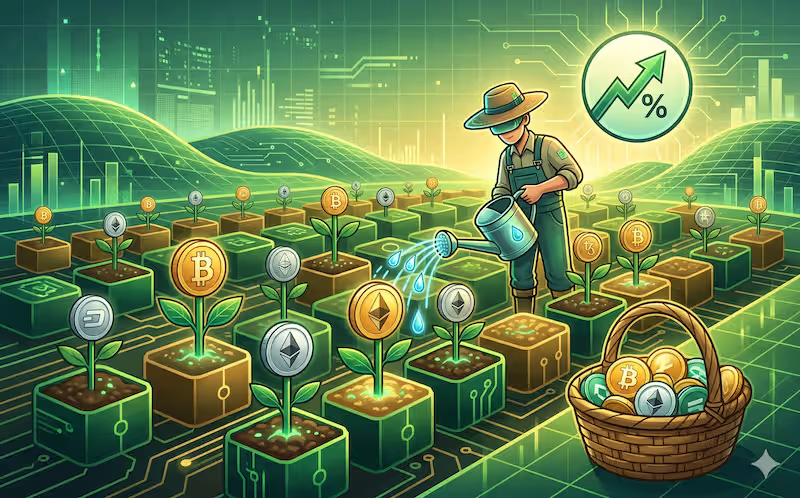
- What is Yield Farming in cryptocurrency?
- How Yield Farming Works
- Risks and Challenges in Cryptocurrency Yield Farming
- Analyzing Yield Farming Returns: APY and Liquidity
- Decentralized Platforms and Protocols in Yield Farming
- Yield Farming Investment Strategies and Approaches
- Ensuring Safety and Security in Yield Farming
- Conclusion
- Frequently Asked Questions
What is Yield Farming in cryptocurrency?
High-yield investment strategy
Yield farming, also known as liquidity mining, is a popular investment strategy in the blockchain world that offers high yields to farmers. It offers individuals opportunities to earn passive income through liquidity mining and lending and borrowing digital assets in the crypto ecosystem. With attractive interest rates, it’s like having a bank for your crypto investments. By participating in liquidity mining, investors can potentially earn additional cryptocurrencies by leveraging their existing holdings through trade on exchanges like Uniswap.
Passive income through lending and borrowing
In yield farming, individuals can lend their cryptocurrencies to other users on decentralized finance (DeFi) platforms like uniswap. These platforms provide a space for users to trade and mine cryptocurrencies. These platforms facilitate peer-to-peer lending and borrowing of crypto assets without intermediaries like traditional banks. Users can trade and exchange their crypto assets directly on platforms like Uniswap. Lenders in the crypto space can earn money by earning interest on their lent assets, while borrowers are required to pay interest on the borrowed funds. This is a common practice among yield farmers in the crypto community.
Lucrative returns and potential risks
Yield farming has become popular due to its potential for lucrative returns in the crypto space. Many people are now using this method to compound their money through exchanges. However, it’s essential to note that higher returns in the crypto world come with increased risks for yield farmers who are looking to make more money by utilizing platforms like Compound. The uniswap cryptocurrency market is highly volatile, and there are risks associated with smart contract vulnerabilities, impermanent loss, compound, and platform hacks. It’s important to be cautious when using the uniswap pool to avoid losing money.
Examples of yield farming protocols
Several yield farming protocols such as Uniswap and Compound have emerged within the cryptocurrency ecosystem, offering opportunities to earn money by participating in pools. One well-known example is Compound Finance, which allows users to lend or borrow various cryptocurrencies by depositing collateral in a pool of tokens. With Compound Finance, users can earn money through the lending and borrowing of tokens, similar to how Uniswap operates. Another example is Uniswap, a decentralized crypto exchange platform that enables users to swap tokens and earn money through liquidity provision. Aave, on the other hand, is a decentralized lending platform that allows users to earn interest on deposited assets or borrow against them. Additionally, Compound is a popular decentralized finance protocol that allows users to earn interest on their crypto holdings or borrow against them.
Coinbase’s involvement in yield farming
Coinbase, one of the leading cryptocurrency exchanges, has also entered the yield farming space by launching Coinbase Earn. With the introduction of Coinbase Earn, users can now participate in yield farming on platforms like Uniswap and Compound to earn money from their crypto holdings in a decentralized manner. This allows users to contribute their funds to liquidity pools and earn rewards in return. This educational initiative allows users to learn about different cryptocurrencies like uniswap and compound while earning money rewards in those tokens.
How Yield Farming Works
Depositing Funds and Earning Rewards
To participate in cryptocurrency yield farming, users deposit their money into liquidity pools on decentralized platforms like Uniswap and Compound. These pools allow users to earn tokens by providing liquidity. These liquidity pools are used to facilitate trading activities. By providing liquidity to these crypto pools, users become liquidity providers and earn money from the fees generated by trading volume in compound tokens.
In addition to earning fees, liquidity providers also receive crypto money and compound tokens as rewards. The number of governance tokens received in the crypto space depends on various factors such as the amount of compound liquidity provided, trading volume, and platform usage. These compound governance tokens often have value in the cryptocurrency market and can be traded or held for potential future gains.
Factors Affecting Yield Farming Rewards
The value of rewards earned through yield farming in the crypto space is influenced by several factors that affect the token economy. One key factor in the crypto market is the trading volume of tokens on the decentralized platform. Higher trading volumes in the crypto market generate more fees for liquidity providers, resulting in higher yields for token holders.
Another factor is the overall usage of the platform. Platforms with a larger user base typically attract more trading activity and token liquidity providers, leading to increased rewards for liquidity providers.
Some platforms offer incentives or bonuses in the form of tokens to encourage users to provide liquidity. These incentives can take various forms such as additional governance tokens or higher yield rates for specific periods.
Risks and Challenges in Cryptocurrency Yield Farming
Impermanent Loss
One of the risks associated with cryptocurrency yield farming is impermanent loss. This loss occurs when the value of the token fluctuates, leading to potential financial setbacks for investors. This occurs when the value of the token assets you deposit into a liquidity pool fluctuates. As a result, you may experience a reduction in overall token value compared to simply holding onto your assets. It’s important to understand that impermanent loss is inherent to the nature of yield farming and can impact your potential profits. This loss can be mitigated by using a token.
Smart Contract Vulnerabilities
Another challenge in cryptocurrency yield farming lies in smart contract vulnerabilities, specifically those related to the token. While decentralized finance (DeFi) platforms strive for security, there have been instances where smart contracts and tokens have been exploited by hackers, resulting in significant financial losses for users. It’s crucial to conduct thorough research on the platforms you choose and assess their security measures before participating in any yield farming activities.
High Transaction Fees
High transaction fees can also pose a challenge. During periods of network congestion or high demand, transaction fees on blockchain networks can skyrocket, eroding potential profits from yield farming activities. It’s essential to consider these fees and factor them into your calculations when deciding whether or not to engage in yield farming.
While these risks and challenges exist within cryptocurrency yield farming, they shouldn’t discourage you from exploring this exciting field. By understanding these potential pitfalls and taking appropriate precautions such as diversifying investments, conducting due diligence on platforms, and staying informed about market conditions, you can mitigate some of the risks involved.
Analyzing Yield Farming Returns: APY and Liquidity
Two key factors to consider are Annual Percentage Yield (APY) and liquidity.
APY: Measuring Return on Investment
APY, or Annual Percentage Yield, is a metric that measures the rate of return on invested capital over a year. It takes into account compounding interest, allowing investors to understand how their initial investment can grow over time. In the context of yield farming, APY helps assess the profitability of participating in various liquidity pools.
Liquidity: Maximizing Returns and Efficiency
Liquidity plays a crucial role in maximizing yield farming returns. In simple terms, liquidity refers to the availability of assets for trading purposes. In the context of yield farming, liquidity is essential for efficient trading and ensures that there are enough funds available for users to participate in different liquidity pools.
Liquidity providers (LPs) contribute their funds to these pools and earn rewards based on their participation. The more liquid a pool is, the easier it is for LPs to enter or exit positions without causing significant price slippage or affecting overall market stability.
Balancing Risk and Reward
When evaluating different yield farming opportunities, it’s important to strike a balance between risk and reward. Some pools may offer higher APYs but have lower liquidity levels, which could result in higher price volatility or difficulties when entering/exiting positions. On the other hand, pools with high liquidity may offer more stable returns but potentially lower APYs.
As an investor or LP, it’s essential to weigh these factors carefully before deciding where to allocate your funds. Assessing both APY and liquidity will help you make informed decisions that align with your risk appetite and investment goals.
Decentralized Platforms and Protocols in Yield Farming
Popular Platforms and Their Unique Features
Decentralized platforms and protocols play a crucial role in the world of cryptocurrency yield farming. Some of the most popular platforms include Compound, Aave, Uniswap, and Curve Finance. Each platform offers unique features that cater to different aspects of yield farming.
Compound is a lending protocol that allows users to supply their cryptocurrencies as collateral for loans or earn interest by lending out their assets. Aave is another lending protocol that enables users to borrow or lend various cryptocurrencies while earning interest on deposited funds.
Uniswap, a decentralized exchange (DEX), facilitates automated market-making through its smart contracts. It allows users to trade tokens directly from their wallets without relying on intermediaries. Curve Finance, on the other hand, specializes in stablecoin swaps with low slippage.
Dominance of Ethereum-based DeFi Protocols
The majority of decentralized finance (DeFi) protocols used in yield farming are built on the Ethereum blockchain. These protocols leverage smart contracts to automate transactions and execute complex financial operations without intermediaries.
Ethereum-based DeFi platforms have gained significant traction due to their versatility and wide range of offerings. They enable users to interact with various protocols seamlessly, utilizing features such as lending/borrowing, liquidity provision, and governance participation.
Governance tokens are an integral part of many DeFi projects. These tokens grant holders voting rights and influence over platform decisions. Users can earn these governance tokens by participating in yield farming activities, locking their assets into specific protocols for a designated period.
In addition to the benefits offered by these platforms, it’s important to note that transaction fees can be relatively high when using Ethereum-based DeFi protocols due to network congestion during peak times.
Yield Farming Investment Strategies and Approaches
Diversification across multiple platforms is a key strategy in cryptocurrency yield farming. By spreading your investments across different protocols, you can reduce the risk exposure associated with any single platform. This approach helps to mitigate potential losses and protect your overall investment.
Staking stablecoins is another popular strategy in yield farming. Stablecoins are cryptocurrencies that aim to maintain a stable value by pegging them to a reserve asset like the US dollar. By staking stablecoins, you can earn more predictable returns with lower volatility compared to other cryptocurrencies. This approach appeals to investors who prefer a more conservative investment strategy.
Following reputable projects with audited smart contracts is crucial. Audits ensure that the code underlying the protocols has been thoroughly reviewed for vulnerabilities or weaknesses. Investing in projects with audited smart contracts enhances security and reduces the risk of exploitation by malicious actors.
Yield farmers should also pay attention to interest rates offered by various protocols. Different platforms may offer varying interest rates depending on factors such as supply and demand dynamics within their ecosystem. Monitoring these rates allows investors to identify opportunities for maximizing their returns.
Ensuring Safety and Security in Yield Farming
Thorough Research for Safe Investments
Conducting thorough research is crucial before engaging in cryptocurrency yield farming. It is essential to thoroughly examine the platforms, protocols, and teams involved. By doing so, farmers can gain insights into their credibility, track record, and security measures.
Enhanced Security with Hardware Wallets
To safeguard their holdings, farmers should consider using hardware wallets or non-custodial wallets. These wallets provide an additional layer of security by storing private keys offline. This reduces the risk of potential hacks or thefts from online platforms.
Regular Monitoring of Smart Contracts
Farmers must remain vigilant and regularly monitor smart contracts used in yield farming. Smart contracts are computer programs that execute transactions automatically. By keeping a close eye on these contracts, farmers can identify any potential vulnerabilities or weaknesses that could compromise their assets.
By adhering to these safety measures, farmers can minimize risks associated with cryptocurrency yield farming while maximizing potential returns.
Conclusion
In conclusion, cryptocurrency yield farming presents an exciting opportunity for investors to maximize their returns in the decentralized finance (DeFi) space. By leveraging various strategies and approaches, individuals can take advantage of the high APYs offered by different protocols and platforms. However, it is crucial to be aware of the risks and challenges associated with yield farming, such as smart contract vulnerabilities and impermanent loss.
To ensure safety and security, it is recommended to conduct thorough research, diversify investments, and stay updated on the latest developments in the DeFi ecosystem. Maintaining a cautious approach and only investing what you can afford to lose is essential.
As the world of cryptocurrency continues to evolve, yield farming remains a dynamic field that demands attention and exploration. By understanding the intricacies of this investment strategy and staying informed about market trends, you can make informed decisions that align with your financial goals.
Frequently Asked Questions
FAQ
Is yield farming still profitable?
Yes, yield farming can be profitable if done correctly. However, it is important to note that the cryptocurrency market is highly volatile and subject to risks. It requires careful research, understanding of different protocols, and strategic decision-making to maximize profits.
How do you maximize yield farming?
To maximize yield farming, diversify your investments across multiple platforms and protocols. Research and analyze the potential returns (APY) and liquidity of different projects. Stay updated with the latest trends and developments in the cryptocurrency space. Implement risk management strategies and consider factors like gas fees, impermanent loss, and platform security.
What is Yield Farming in cryptocurrency?
Yield farming refers to the practice of using cryptocurrency assets to generate additional returns by lending or staking them on decentralized platforms or protocols. It involves providing liquidity to these platforms in exchange for rewards such as interest payments or governance tokens.
What are the risks and challenges in cryptocurrency yield farming, a practice that involves high yields and liquidity mining on decentralized exchanges?
Cryptocurrency yield farming carries several risks including smart contract vulnerabilities, impermanent loss due to price volatility, hacking attacks on platforms, low liquidity leading to slippage during transactions, regulatory uncertainties, and scams. Understanding these risks is crucial before engaging in yield farming activities.
How do you ensure safety and security in high yield farming for farmers with large holdings? Here are some ways to protect your investments.
To ensure safety and security in yield farming:
- Conduct thorough research on platforms and protocols.
- Choose reputable projects with audited smart contracts.
- Use hardware wallets or secure wallets for storing assets.
- Be cautious of phishing attempts or suspicious links.
- Keep software up-to-date.
- Monitor transactions regularly for any unusual activity.
- Consider insurance options provided by certain platforms.


